
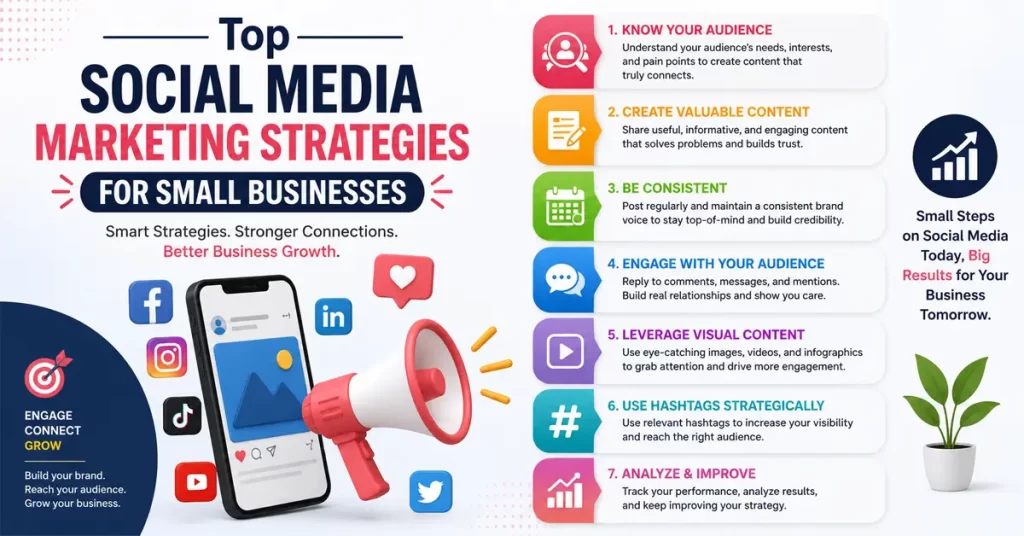
1.Set Clear Marketing Goals
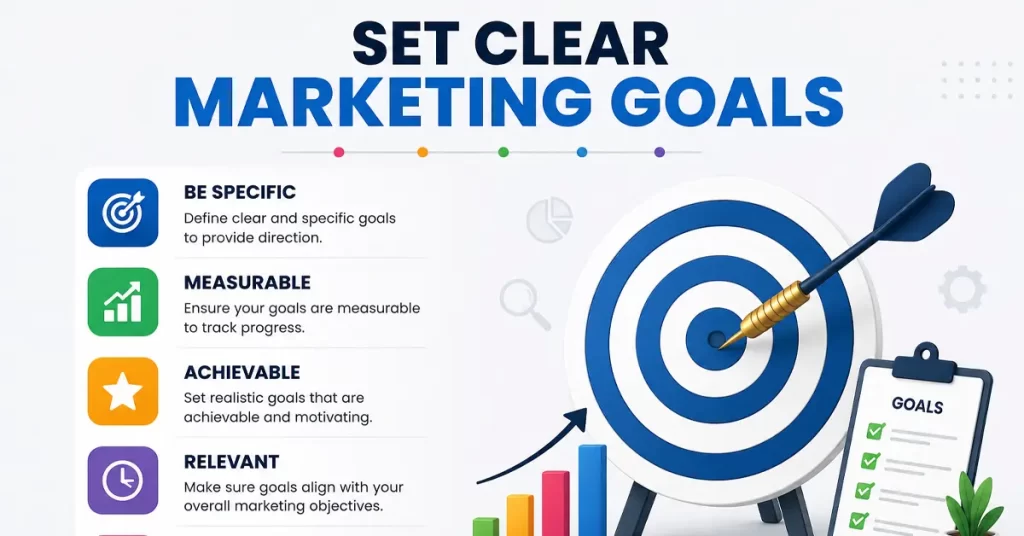
- Increase Brand Awareness Increase brand awareness by focusing on social media engagement, influencer partnerships, and content marketing. These core tactics build familiarity and help potential customers recognize your business.
- Generate quality leads
Quality lead generation focuses on attracting prospects with high purchase intent through precise audience targeting, value-first content funnels, and intentional friction filters.
Core Strategies
- Define your Ideal Customer Profile (ICP): Know exact firmographics, behaviors, and pain points before launching campaigns.
- Use Value-First Content: Educate users via upfront videos or guides so they trust your brand before filling out forms.
- Add Friction Filters: Place strategic survey questions in your funnels to actively block unqualified prospects from booking calls.
- Drive website trafficDriving traffic to your website requires a mix of search engine optimization, content creation, and active promotion. The most effective methods include search engine optimization (SEO), content marketing, and social media promotion.Most users on Reddit agree that a combination of steady, keyword-targeted content and authentic community engagement is the most reliable way to grow organic traffic over time.
2. Know Your Target Audience
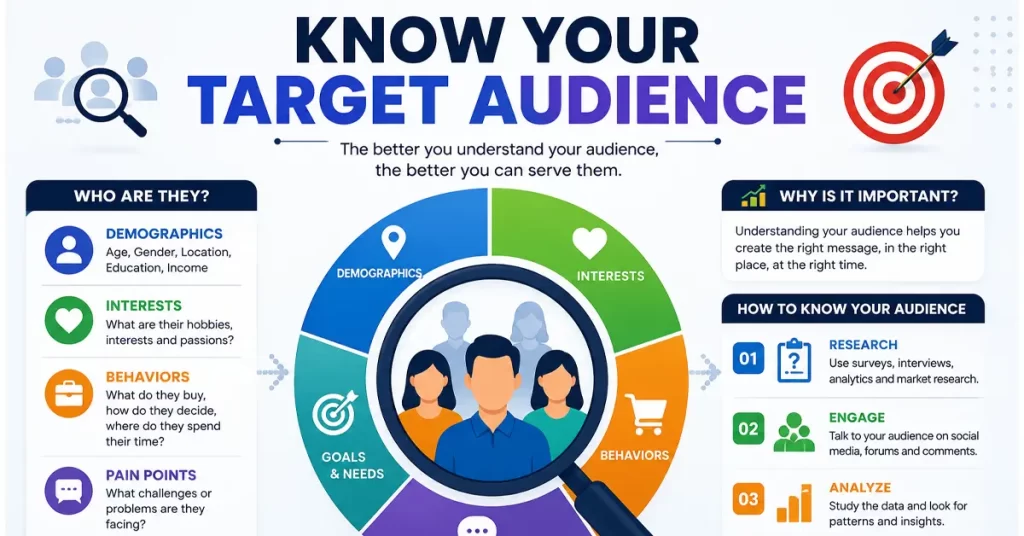
Research your audience based on:
- Age
Analyzing an audience by age means dividing users into generational brackets like Gen Z (13–26), Millennials (27–43), Gen X (44–59), and Baby Boomers (60–78) to understand their unique behavior
- Gender analyzes how different gender groups interact with content, discover products, and make buying choices. Key factors include platform preferences, discovery methods, and engagement styles.
- Location Researching an audience by location involves studying geographic data, local behavior, and proximity to understand where people live, work, and shop. This helps you target messages, ads, and services to the right areas.
- Interests Researching your audience’s interests involves identifying their hobbies, passions, and media preferences. To do this effectively, focus on data analysis, competitor review, and audience segmentation.
- Income Researching your audience by income involves dividing your market into economic tiers, specifically focusing on low-income, middle-income, and high-income segments. This data shows you who can buy your products, how much they can spend, and what kind of value they expect
3.Create High-Quality Content
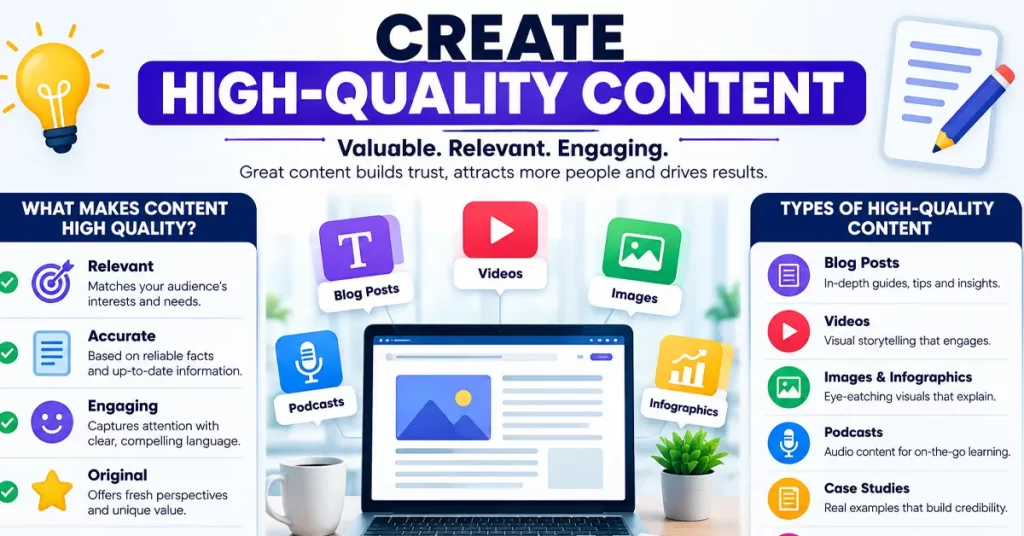
- Educational PostsEducational posts are online content pieces designed to teach a specific topic, share skills, or build knowledge. They often take the form of carousels, infographics, or short articles.Key Types of Educational Posts
- Carousels: Step-by-step guides or tips broken into multiple swipeable images.
- Infographics: Visual summaries of data, facts, or complex processes.
- Q&A / Explainer Cards: Direct answers to common questions or myths in a specific field.
- Reels Reels most commonly refers to short vertical videos on social media, physical spools for winding thread or film, or a spinning motion and staggering movement.
- Short Videos A short video (or short-form video) is a brief clip lasting anywhere from a few seconds to three minutes, usually filmed vertically for mobile phones. Key examples include TikTok, Instagram Reels, and YouTube Shorts.
- Infographics An infographic is a visual image such as a chart, diagram, or picture used to show and explain information quickly and clearly. The word combines information and graphics
4.Follow the 80/20 Rule
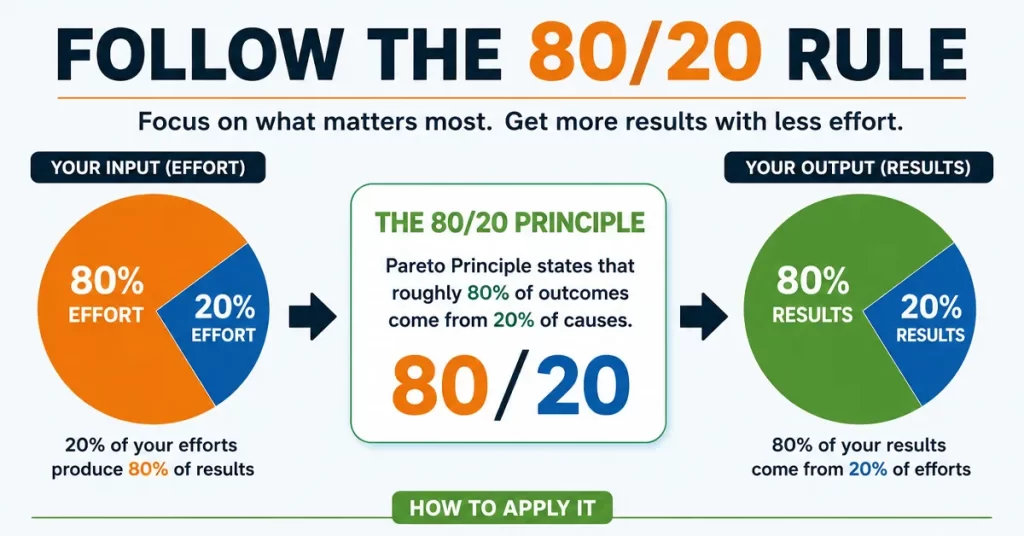
80% Value & Educational Content
The 80/20 content rule states that 80% of your content should provide free value and education, while only 20% should be direct promotion. This approach builds trust, establishes authority, and attracts an engaged audience before you ever try to sell a product or servic
What Goes in the 80% Value Bucket?
- Educational guides: Step-by-step how-to posts, tutorials, and deep-dive explanations that solve specific problems.
- Industry insights: Sharing useful trends, tips, and expert perspectives.
- Inspirational stories: Real case studies, behind-the-scenes processes, and customer success stories.
- 20% Promotional Content
What Goes in the 20% Promotion Bucket?
- Direct pitches: Clear calls to action to buy your specific product, tool, or paid service.
- Commercial offers: Direct sales messages, product launches, and heavy discounts.
5.Build a Content Calendar
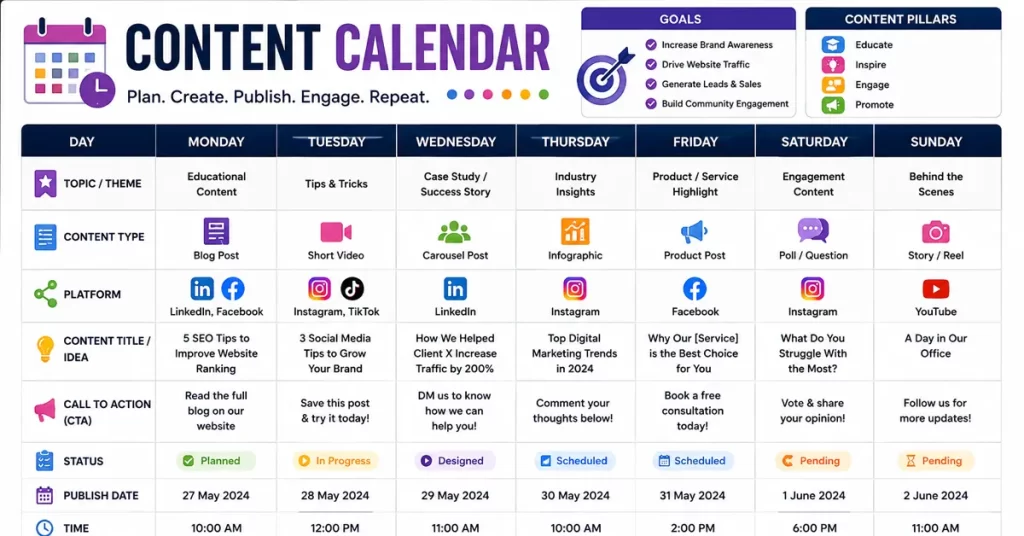
Example Weekly Plan
A simple weekly content plan uses daily themes like educational posts, engaging questions, and behind-the-scenes looks to keep your audience active.
Content Schedule
- Monday: Educational Post (Share a useful tip, a how-to guide, or an industry fact)
- Tuesday: Engaging Question (Ask your followers a fun or thought-provoking question to get comments)
- Wednesday: Behind-the-Scenes (Show how you work, your workspace, or your daily routine)
- Thursday: Customer Spotlight (Share a review, a success story, or user-generated content)
- Friday: Promotional Post (Highlight your main product, service, or latest offer)
- Saturday: Lighthearted/Fun (Post a meme, a poll, or a weekend-themed thought)
- Sunday: Weekly Recap (Summarize key points or share a preview of the next week)
1. What is Social Media Marketing?
Social Media Marketing (SMM) is the process of promoting a business, product, or service through platforms like Facebook, Instagram, LinkedIn, YouTube, TikTok, and X to increase brand awareness, generate leads, and drive sales.
2. Why is Social Media Marketing important?
It helps businesses reach targeted audiences, build trust, increase website traffic, improve customer engagement, and generate more sales at a relatively low cost.
3. Which social media platform is best for businesses?
It depends on your audience:
Facebook: Local businesses
Instagram: Brands and eCommerce
LinkedIn: B2B companies
YouTube: Educational and long-form content
TikTok: Short-form viral videos
4. How often should I post on social media?
Most businesses benefit from posting 3–7 times per week, with consistency being more important than volume.
5. What types of content perform best?
Videos, reels, educational posts, tutorials, customer testimonials, behind-the-scenes content, and interactive polls typically achieve the highest engagement.