
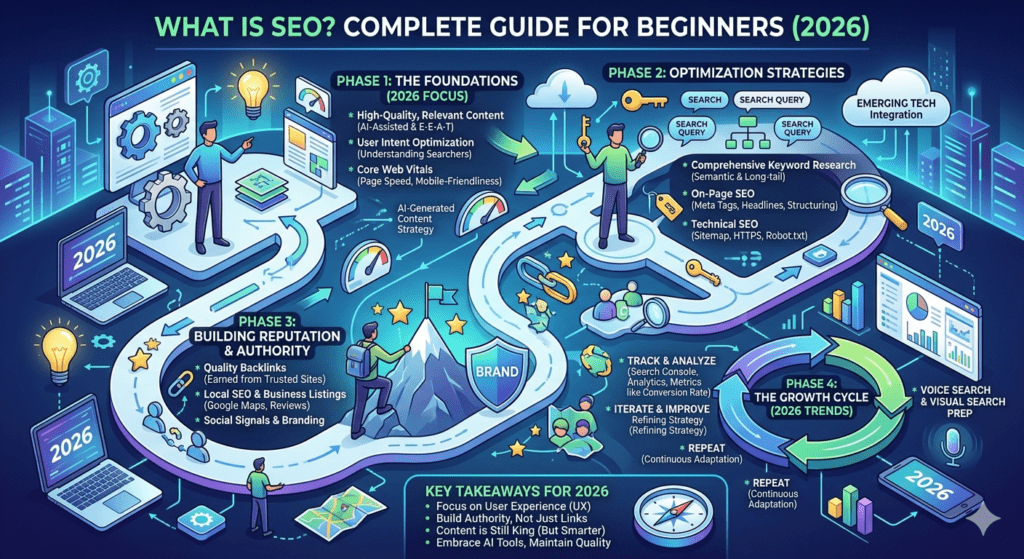
1.Introduction
- What is seo SEO (Search Engine Optimization) is the practice of improving a website to increase its visibility in unpaid, “organic” search results on engines like Google. The primary goal is to attract high-quality, targeted visitors who are actively searching for your information, products, or services.
- Why is important Understanding “why” is the foundation of meaning, motivation, and critical thinking. It cuts through complexity to give you clarity, helps you prioritize what truly matters, and drives purposeful action in both your personal and professional life.
2.What SEO is and how it works
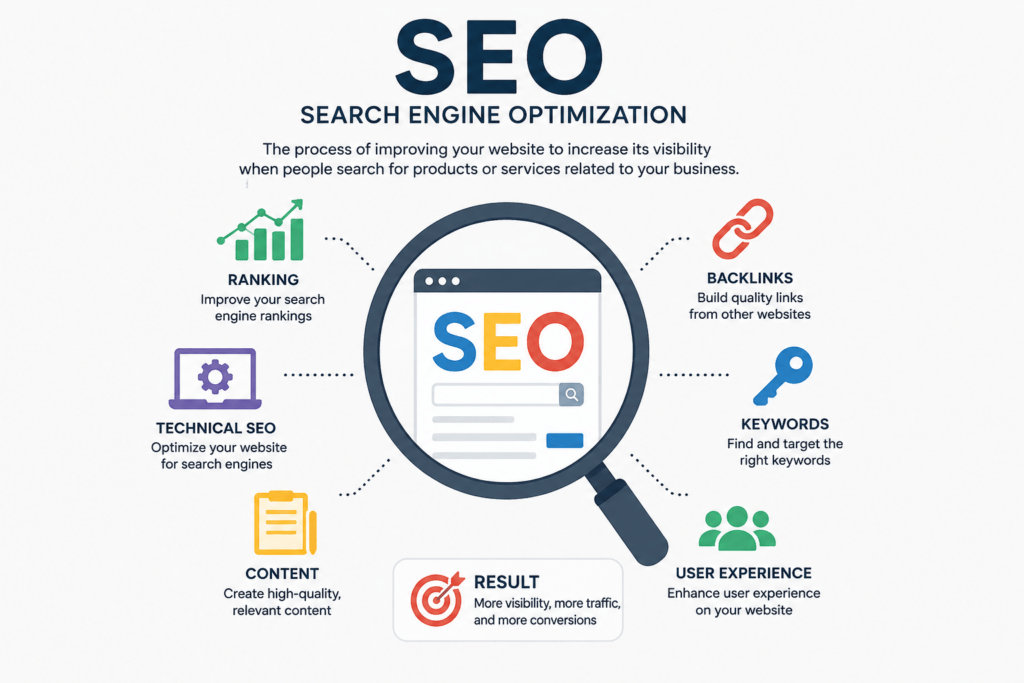
SEO (Search Engine Optimization) is the process of improving your website so it appears higher in unpaid search engine results. The goal is to drive free, organic traffic by making your pages relevant, trustworthy, and easy for search engines like Google to understand.
Search engines use complex algorithms to deliver the best possible results for a user’s query. The process involves three main steps: Crawling: Search engines deploy automated bots (or “spiders”) to scan the internet, discovering new and updated web pages.
- Indexing: The discovered data is organized and stored in a massive digital library called an index.
- Ranking: When a user types a search, the search engine sifts through its index and ranks the most relevant and authoritative pages on the Search Engine Results Page (SERP).
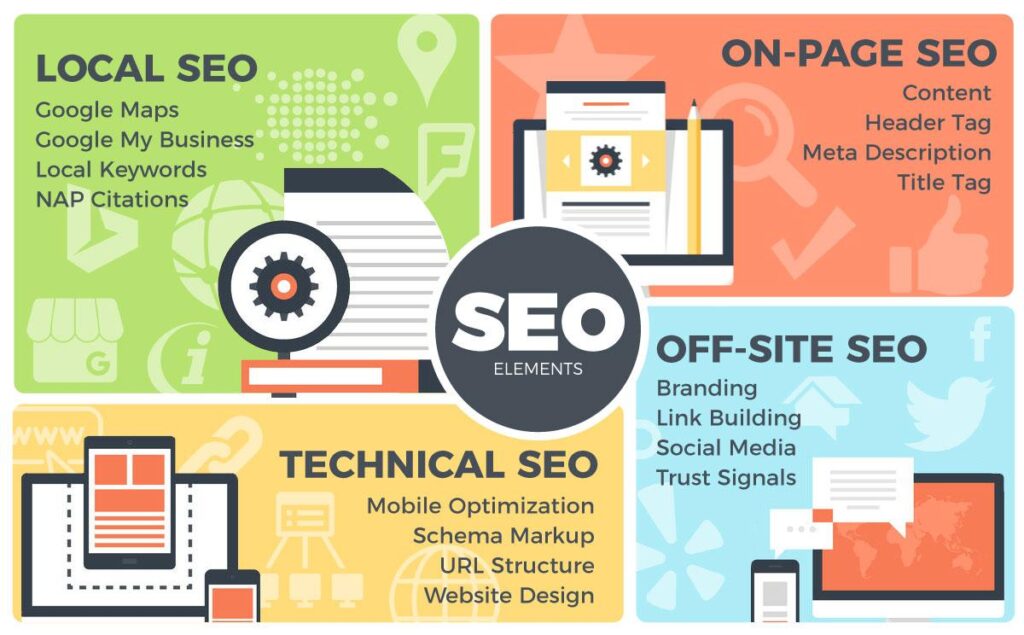
The 4 Pillars of SEO
To rank higher, you must align your website with search engine algorithms through these key areas:
- On-Page SEO (Content): Creating high-quality, valuable content that matches “search intent” (what the user is looking for) and strategically using keywords.
- Technical SEO: Ensuring your website loads fast, works well on mobile devices, and has a clean structure so bots can easily crawl and index it.
- Off-Page SEO (Authority): Building trust through “backlinks” (links from other reputable websites pointing to yours) which act as digital votes of confidence.
- Local SEO: Optimizing your site (and your presence on platforms like Google Business Profile) to attract customers from your specific geographic area.
3.Why SEO is important in 2026
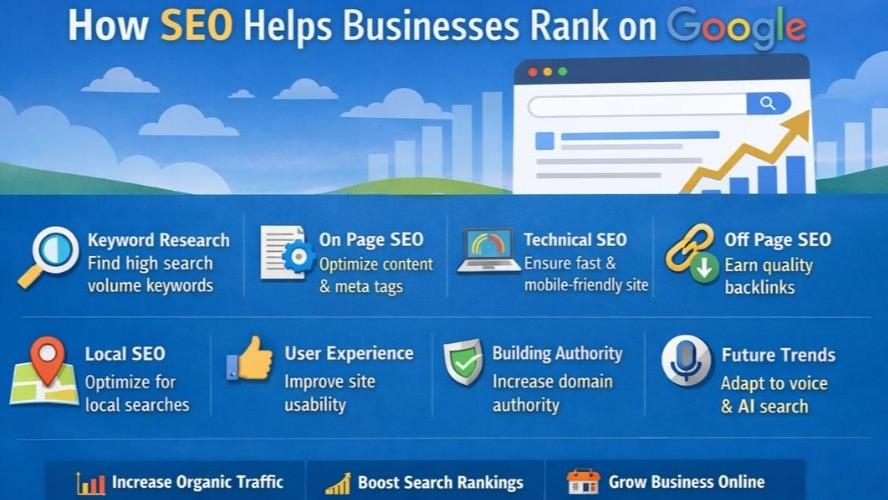
In 2026, SEO is crucial because search has transformed into an AI-driven discovery ecosystem. Beyond just traditional Google rankings, SEO is now about Generative Engine Optimization (GEO)—ensuring your brand is cited by AI assistants, capturing voice search, and building E-E-A-T (Experience, Expertise, Authoritativeness, Trustworthiness) to drive sustainable, low-cost organic traffic.
Why SEO Matters Now More Than Ever
- AI and Answer Engine Optimization (AEO): Platforms like Google AI Overviews synthesize answers directly on the page. Good SEO ensures your business is cited as the source in these AI-generated responses rather than getting skipped.
- Cost Efficiency in Customer Acquisition: With digital advertising costs soaring, SEO remains a compounding, long-term asset. A well-optimized page drives predictable inbound leads month after month without ad spend.
- Hyper-Local Discovery: With the surge in mobile and voice queries (e.g., “near me”), localized search dominates. Optimizing your local presence directly drives foot traffic and service bookings.
- Credibility and Trust: Users inherently trust websites that appear at the top of search results or get recommended by AI. Modern SEO focuses heavily on user experience, fast Core Web Vitals, and authoritative content, all of which boost conversion rates
4.Different types of SEO
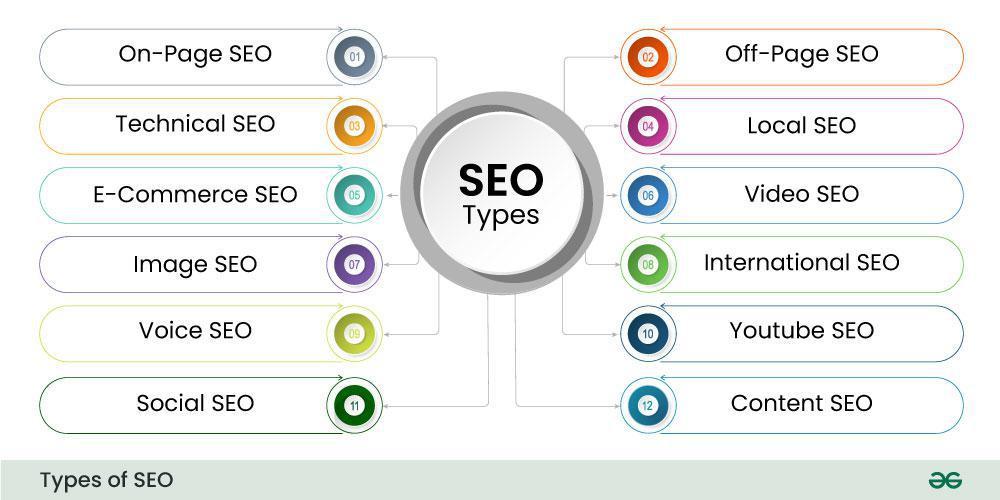
Search Engine Optimization (SEO) is broadly categorized into four core pillars and several specialized niches. To choose the right strategy, explore the primary types
- On-Page SEO: Optimizing content, keywords, title tags, and meta descriptions within your actual web pages to improve rankings and satisfy user intent.
- Off-Page SEO: Building site authority and trust through external signals, primarily by earning backlinks from reputable websites.
- Technical SEO: Enhancing backend website infrastructure to ensure search engine crawlers can seamlessly index your site.
- Local SEO: Optimizing your online presence to attract nearby customers, heavily reliant on a strong Google Business Profile and local citations.
- E-commerce SEO: Specialized strategies for online stores to improve product listing visibility, structured data, and category navigation
5.Keyword research basics
Keyword research is the process of finding and analyzing the specific words and phrases people type into search engines like Google. It helps you understand your audience’s language, allowing you to create content that ranks higher in search results and drives targeted traffic to your site.
1. Brainstorm Seed Keywords
Start by listing 5 to 10 broad words and phrases related to your niche, products, or services. If you sell coffee makers, these seeds might simply be “espresso machine” or “coffee grinder.
2. Use Free Discovery Tools
To expand your seed words into full phrases, use free tools to find what your audience is actually typing
- Google Search Autocomplete: Type your seed word into Google and see what popular phrases it suggests.
- People Also Ask: Scroll down the Google search page to find questions and long-tail keyword variations.
- Google Keyword Plannar: Enter your seed keywords to view estimated search volumes and get more ideas.
3. Understand Search Intent
Ensure the keywords you choose match what the user is actually looking for. Keywords typically fall into one of four buckets
- Informational: Users want to learn how to do something (e.g., “how to brew pour over coffee”).
- Commercial: Users are researching options (e.g., “best espresso machines under $500”).
- Transactional: Users are ready to buy (e.g., “buy Breville Barista Express” ).
4. Evaluate Keyword Difficulty and Volume
- Search Volume: This tells you roughly how many times a keyword is searched per month.
- Keyword Difficulty (KD): This estimates how hard it will be to rank on the first page of Google. As a beginner, filter for lower-competition, long-tail phrases that are easier to win, rather than immediately targeting highly competitive, one-word keywords
6.On-Page SEO techniques
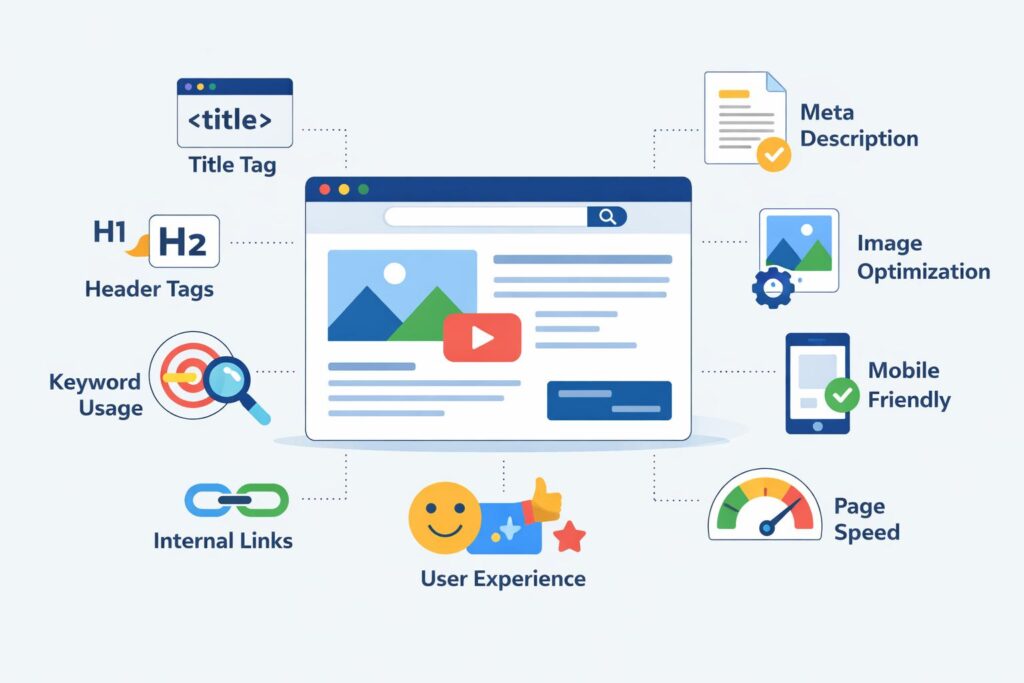
On-page SEO refers to optimizing individual web pages to rank higher and earn more relevant traffic. Key techniques include placing primary keywords naturally in your URL, title tag, H1 heading, and the first 100 words of content, structuring text with H2/H3 headings, and compressing images while adding descriptive Alt text.
Content & Keyword Optimization
Creating intent-driven, high-quality content that answers the user’s query is the most important ranking factor.
- Search Intent: Align your content with what the user is looking for (informational, commercial, transactional, or navigational).
- Keyword Placement: Place your primary keyword in high-value locations: the title tag, H1 heading, URL slug, and the first paragraph.
- Secondary Keywords: Sprinkle related terms (LSI keywords) throughout your H2 and H3 subheadings and body text naturally to provide comprehensive context
7.Off-Page SEO strategies
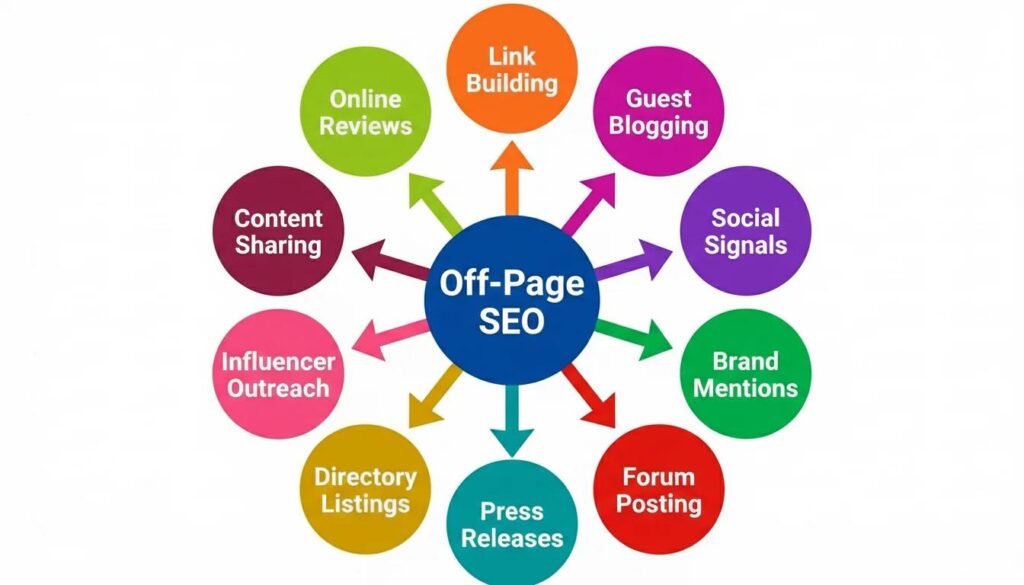
Off-page SEO refers to actions taken outside of your own website to impact your rankings within search engine results pages (SERPs). These techniques act as “votes of confidence”, signaling to search engines that your site is authoritative, trustworthy, and valuable.
The core of off-page SEO involves building backlinks, securing brand mentions, and improving your site’s overall reputation across the internet. Here are the most effective techniques you can implement to build authority.
1. Backlink Building
Backlinks are the foundation of off-page SEO. Search engines like Google view links from other reputable sites as a strong endorsement of your content’s quality.
- Guest Blogging: Write high-quality articles for established websites in your niche in exchange for a contextual backlink back to your site.
- The Skyscraper Technique: Find high-performing content in your industry, create an even better, more comprehensive version of it, and reach out to websites that linked to the original piece to link to yours instead.
- Broken Link Building: Use SEO tools to find dead (broken) links on relevant websites and suggest your content as a replacement.
2. Digital PR and Brand Mentions
You don’t always need a direct link for off-page SEO to work; search engines can recognize when your brand is discussed online.
- Brand Mentions: Track down unlinked brand mentions on blogs or news sites and politely ask the author to turn the mention into a clickable link.
- HARO (Help a Reporter Out) / Connectively: Register as an industry expert on journalist-sourcing platforms to provide quotes for news articles, which frequently result in high-authority backlinks and press coverage.
3. Local SEO and Citations
For physical businesses or localized service providers, your off-page presence relies heavily on local citations.
- Business Listings: Claim and optimize you Google Business Profile . Ensure your Name, Address, and Phone number (NAP) are consistent across top internet directories like Yelp and Yellow Pages.
- Local Reviews: Actively encourage genuine customer reviews on platforms like Trustpilot or Yelp to build immediate consumer trust and credibility.
4. Social Media and Community Engagement
While social shares generally do not pass direct “link juice” (authority), they influence search signals by driving referral traffic and expanding brand awareness.
- Social Platforms: Share your blog posts and articles on platforms like LinkedIn, X, or Facebook to attract shares from industry leaders.
8.Technical SEO fundamentals
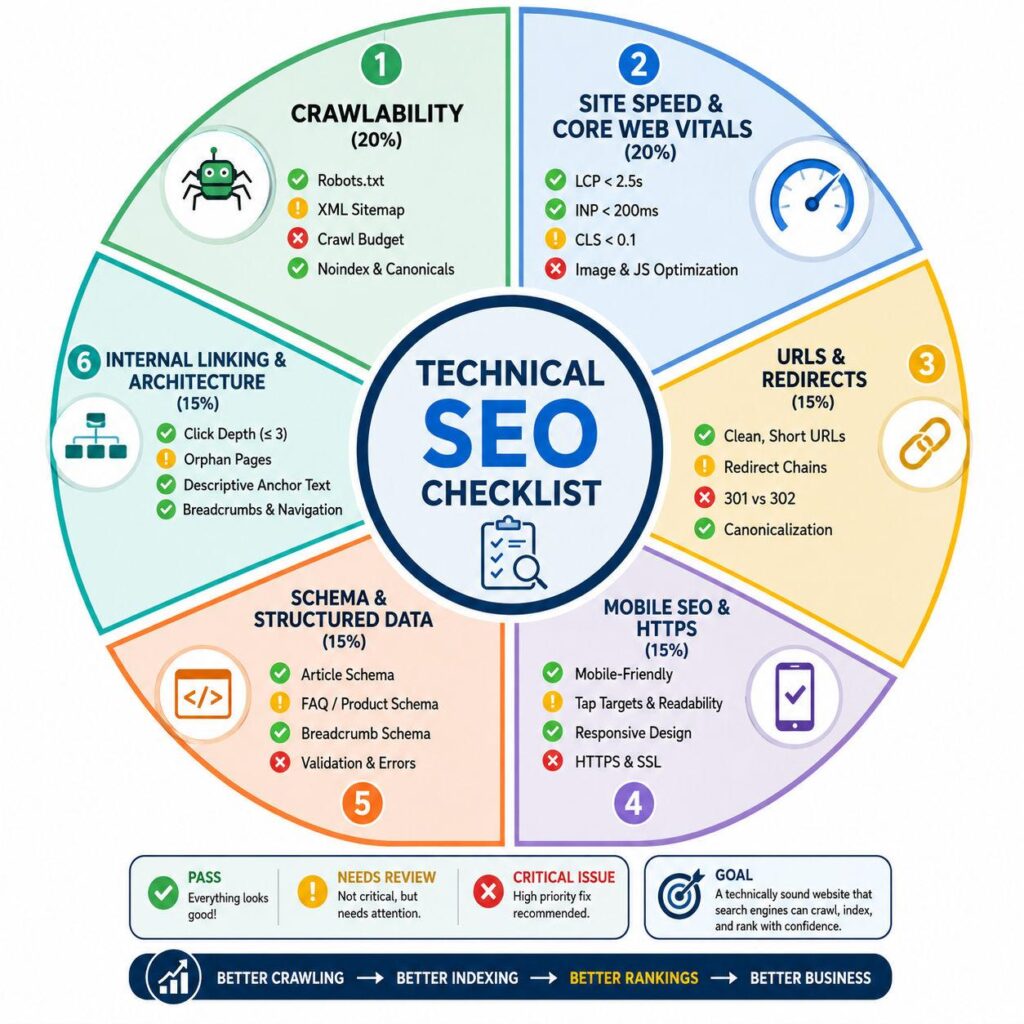
Technical SEO is the process of optimizing your website’s infrastructure so search engines can easily crawl, render, and index your content. It focuses on site speed, mobile-friendliness, security, and structured data, ensuring your content is accessible to both traditional search engines and emerging AI search systems.
1. Crawlability and Indexability
Search engines use automated bots to discover and store your pages. If bots cannot navigate your site, your content won’t appear in search results.
- XML Sitemaps: An XML sitemap acts as a roadmap, listing all your important pages so search engines can find them faster.
- Robots.txt: This file instructs search engines on which pages or sections they are allowed to crawl and which to avoid.
- Meta Robots Tags: Use tags like
index,noindex,follow, andnofollowto tell search engines whether a specific page should be added to their index and if they should follow the links on that page.
2. Site Speed and Performance
Fast-loading websites provide a better user experience and are heavily favored by search engines.
- Core Web Vitals: Google measures your site’s loading speed (Largest Contentful Paint – LCP), visual stability (Cumulative Layout Shift – CLS), and interactivity (Interaction to Next Paint – INP).
- Speed Optimization: Compress images, leverage browser caching, and utilize a Content Delivery Network (CDN) to reduce server response times.
9.Local SEO
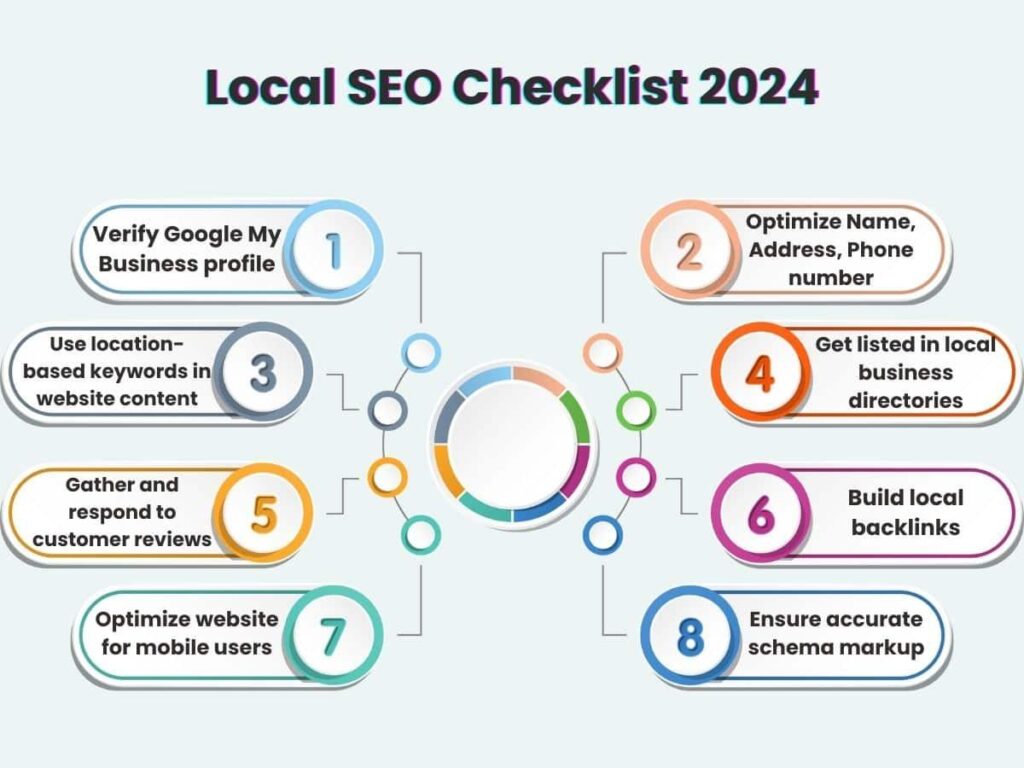
Local SEO (Search Engine Optimization) is the practice of optimizing your online presence to attract more business from relevant local searches. It focuses on getting your business to appear prominently in Google Maps results (the “Local Pack”) and localized organic search results.
To dominate local search, follow these four core steps:
- Claim & Optimize Your Profile: Claim your free Google Business Profile. Completely fill out your address, phone number, operating hours, and business categories, and regularly add photos to build trust.
- Generate Reviews: Actively ask satisfied customers to leave reviews on your Google profile. Positive reviews are a primary ranking factor and directly influence consumer click-through rates.
- Ensure NAP Consistency: Your business Name, Address, and Phone number (NAP) must be identical across all your digital assets, including your website and local directories like Yelp or Yellow Pages.
- Build Local Content: Add location-specific keywords to your website’s meta titles, descriptions, and on-page text. Create dedicated landing pages for the specific towns or regions you serve.
1. What is SEO?
SEO (Search Engine Optimization) is the process of improving a website so it ranks higher in search engine results and attracts more organic (non-paid) traffic.
2. Why is SEO important in 2026?
SEO helps businesses increase website traffic, generate leads, improve brand visibility, reduce advertising costs, and build long-term online growth.
3. How does SEO work?
SEO works by optimizing website content, keywords, technical performance, backlinks, and user experience so search engines can better understand and rank your pages..
4. What are the main types of SEO?
The four main types are:
On-Page SEO
Off-Page SEO
Technical SEO
Local SEO
5. What is Organic Traffic?
Organic traffic refers to visitors who come to your website through unpaid search engine results rather than advertisements.
6. What is Keyword Research?
Keyword research is the process of finding the words and phrases people search for on Google so you can create content that matches their intent.