
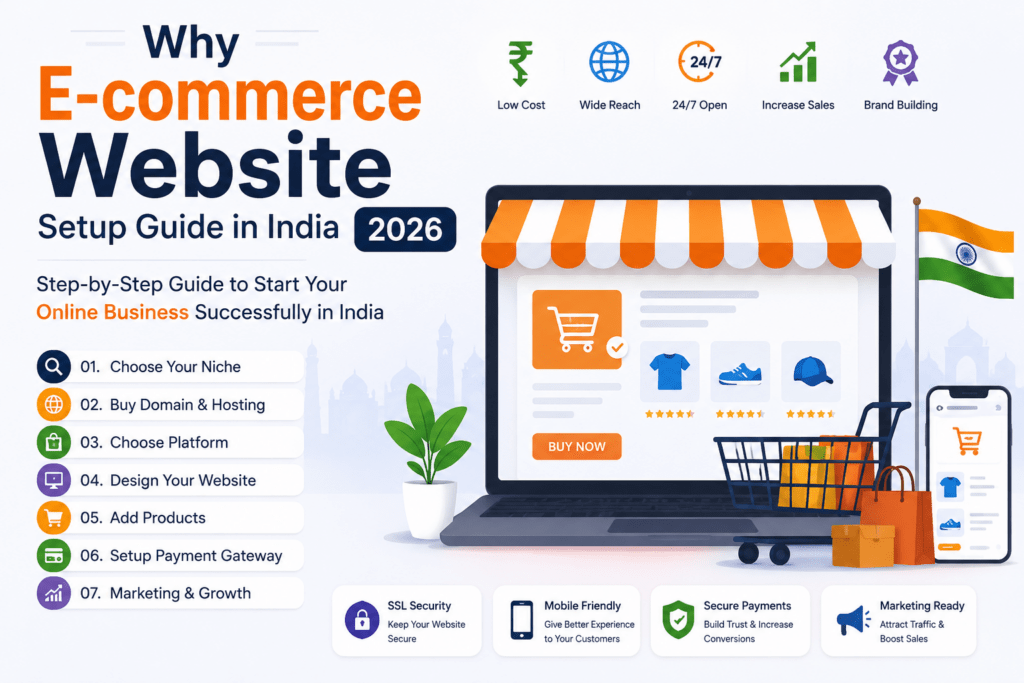
1. Introduction
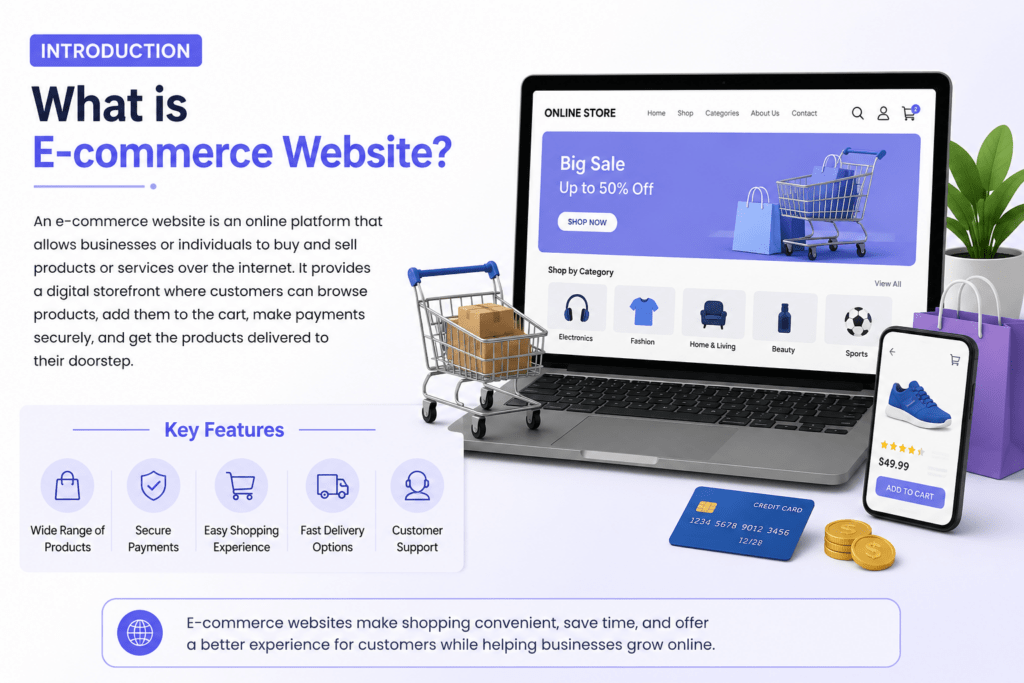
- What is E-commerce website An e-commerce website is a digital storefront that allows businesses and individuals to buy and sell products or services over the internet. It functions as the virtual equivalent of a physical shop, handling everything from product browsing and shopping carts to secure online payments and order confirmations.
Why choose as E-commerce website Choosing an e-commerce website allows you to sell products 24/7, eliminate geographical limits, and drastically lower overhead costs compared to a physical store. It empowers you to reach a global audience, track customer behavior for targeted marketing, and scale your business with ease
2.Complete E-commerce Website Setup Guide in India 2026
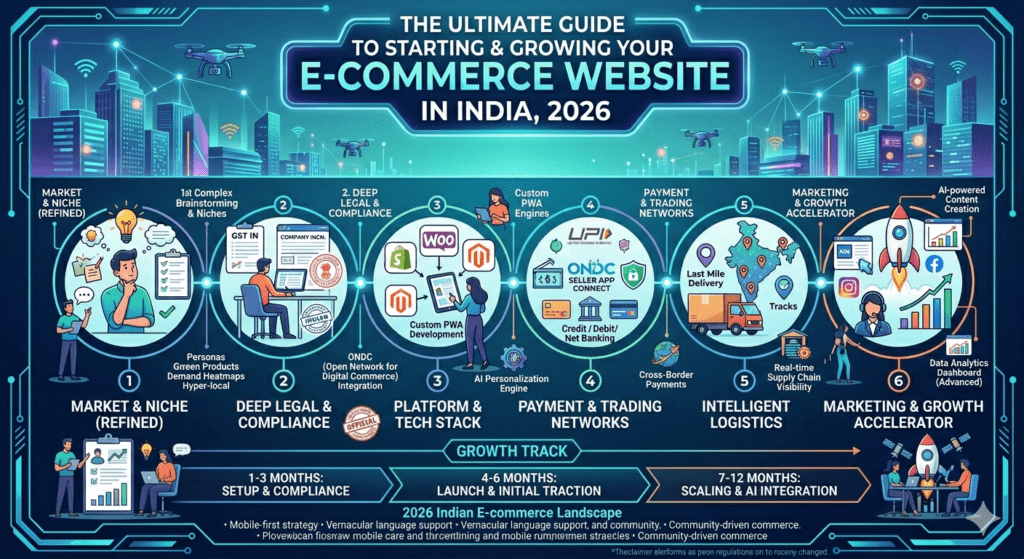
Starting an e-commerce website in India involves setting up a business structure, choosing a platform like Shopify or WooCommerce, integrating localized payments (e.g., Razorpay or Cashfree), and connecting logistics APIs (e.g., Shiprocket or Delhivery) for order fulfillment
- Business Registration: Register as a Sole Proprietorship, LLP, or Private Limited Company.
- Mandatory Documents: You will need a PAN Card, Aadhaar Card, and a current Bank Account.
- GST Registration: A Goods and Services Tax (GST) number is legally required to sell online in India. If you use certain payment gateways or sell interstate, you typically need this from day one
- Shopify: The easiest, fully hosted SaaS platform. It handles hosting, provides built-in Indian payment gateway options, and integrates seamlessly with local apps.
- WooCommerce (WordPress): Best if you want absolute customization, full data ownership, and have a smaller budget. Requires purchasing independent web hosting (e.g., Hostinger) and connecting it to the free WooCommerce plugin.
- Top Gateways: Integrate Razorpay, Cashfree, or CCAvenue into your store.
- Trust & Security: Ensure you have an SSL certificate activated so your site displays “HTTPS”.
- Shipping Aggregators: Instead of tying up with one courier, use aggregators like Shiprocket or Delhivery. They aggregate multiple courier services (FedEx, Bluedart, etc.), provide discounted rates, and automatically sync tracking details to your store.
- COD (Cash on Delivery): Enabling COD is highly recommended, as it remains a preferred payment method for many Indian online shoppers.
- Mobile Responsiveness: The vast majority of Indian consumers shop from their smartphones. Ensure your store’s theme looks clean and loads quickly on mobile networks.
- Domain Name: Purchase a trusted TLD through registrars like GoDaddy or Namecheap
- What types of products you are planning to sell
- Your preferred e-commerce platform (Shopify vs. WordPress)
- Your approximate budget
3.How to Start an E-commerce Website in India in 2026
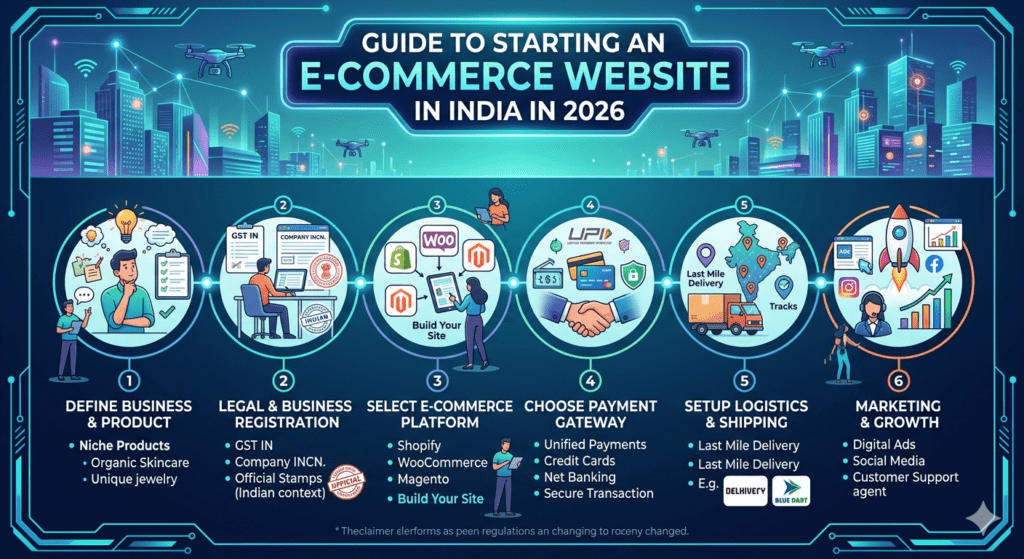
Starting an e-commerce website in India involves choosing a platform (like Shopify for building your own brand or Amazon India for marketplace reach), obtaining a mandatory GSTIN if your turnover exceeds ₹20 lakhs, and integrating local payment gateways (like Razorpay) and shipping aggregators (like Shiprocket).
- Direct-to-Consumer (D2C): Build your own branded store (using Shopify or WooCommerce) to retain customer data and profit margins.
- Aggregators/Marketplaces: Sell through Amazon India or Flipkart to tap into an existing massive customer base.
- Dropshipping: Sell products without holding inventory. You partner with wholesalers who ship directly to the customer.
- Business Registration: Start as a Sole Proprietorship for simplicity, or register as a Private Limited Company or LLP for scalability.
- GSTIN: A Goods and Services Tax Identification Number is mandatory for selling online in India if you exceed ₹20 lakhs in sales (₹10 lakhs in special category states like Uttarakhand).
- Bank Account: Open a dedicated current bank account in your business’s name.
- IEC Code: Required if you plan to import goods to sell or export your products globally.
- Self-Hosted Platforms: Use Shopify India or WooCommerce for full creative control over your store’s branding, layout, and customer experience.
- Social Commerce: If you have zero upfront budget, leverage platforms like Amazon SmartBiz or simply start by building an engaged community on Instagram.
- Payment Gateways: Integrate reliable, trusted Indian gateways like Razorpay or Cashfree to accept UPI, Credit/Debit cards, and Net Banking.
- Shipping & Logistics: Instead of managing your own fleet, use aggregators like Shiprocket or NimbusPost. They aggregate multiple courier partners (like Delhivery, FedEx, and Bluedart) to give you discounted rates and Cash on Delivery (COD) features.
- SEO & Content: Focus on optimizing your product pages with targeted keywords so local buyers can discover your brand.
- Social Media & Ads: Run localized or targeted campaigns using Meta Ads Manager and Google Ads.
- WhatsApp Commerce: Utilize the WhatsApp Business Platform for automated order confirmations, customer support, and promotional updates.
4. E-commerce Website Setup in India 2026: Step-by-Step Business Guide
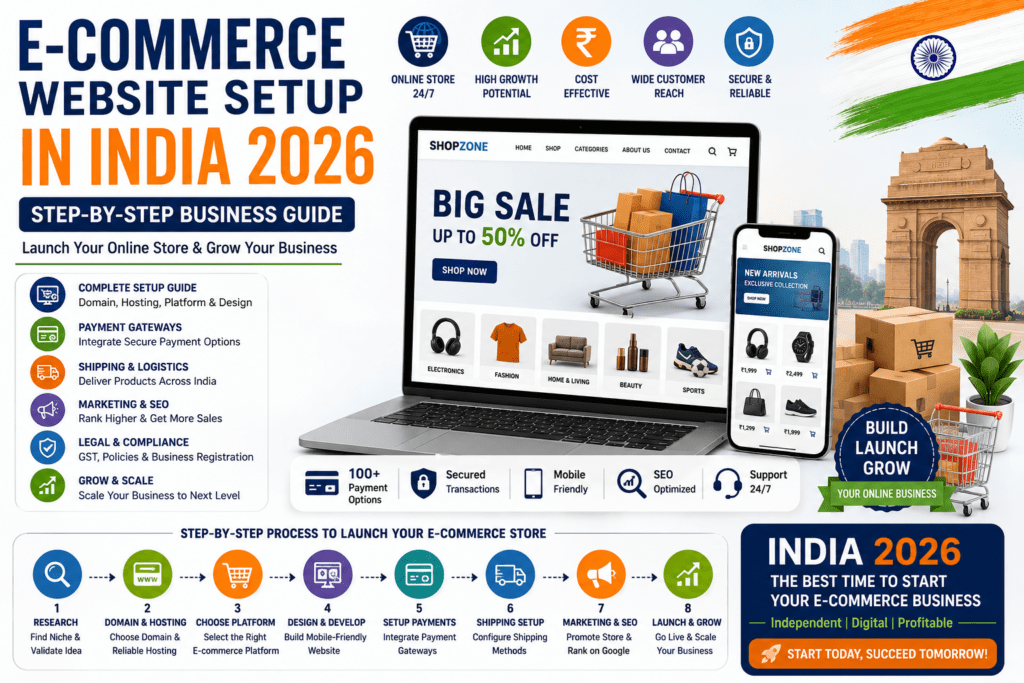
- Find Your Niche: Focus on a specific category (e.g., regional handicrafts, organic skincare) rather than competing head-on with large marketplaces.
- Sourcing: Identify manufacturers, wholesalers, or distributors. You can source products locally or use directory portals like IndiaMART to connect with domestic vendors.
- Business Structure: Choose a structure such as a Sole Proprietorship, Private Limited Company, or Limited Liability Partnership (LLP).
- GST Registration: A Goods and Services Tax (GST) number is mandatory for selling online in India.
- Bank Account: Open a dedicated current bank account in the registered business name.
- PAN/TAN: Secure your permanent and tax deduction account numbers for corporate taxation.
- Shopify: An all-in-one, beginner-friendly platform with built-in hosting, templates, and Indian payment integrations.
- WooCommerce: An open-source, highly customizable plugin for WordPress. Ideal if you want complete control and own the hosting.
- ONDC (Open Network for Digital Commerce): Register as a seller on the ONDC network to increase visibility across multiple buyer apps in India without paying high marketplace commissions.
- Payment Gateways: Integrate a trusted Indian payment gateway to process UPI, credit/debit cards, and net banking. Popular options include Razorpay or PayU.
- Shipping & Logistics: For reliable delivery, integrate with tech-enabled logistics aggregators like Shiprocket or Delhivery to automate shipping rates and tracking across India.
- Privacy Policy
- Terms and Conditions
- Return and Refund Policy
- Shipping and Delivery Policy
- Digital Ads: Start your promotional campaigns using targeted ads on Meta (Facebook/Instagram) and Google.
- SEO: Optimize your product titles, descriptions, and alt tags for search engines so local customers can find your store organically.
5. The Ultimate Guide to Launching an Online Store in India 2026
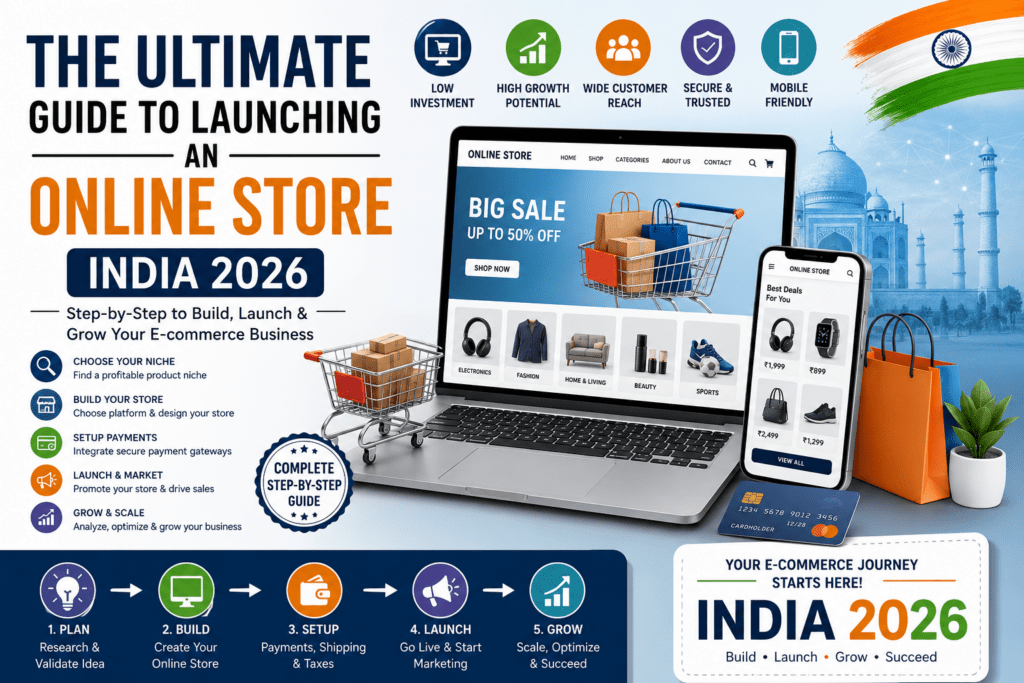
Launching an online store in India requires selecting a strong niche, securing mandatory GST registration (mandatory if annual turnover exceeds ₹20 Lakhs), choosing a platform (like Shopify or Amazon), and setting up reliable payment gateways and logistics. Total startup costs typically range between ₹10,000 to ₹50,000.
- Business Structure: Register your business as a Sole Proprietorship or a Private Limited Company.
- GST & PAN: Obtain a Permanent Account Number (PAN) and register for the Goods and Services Tax (GST) if your projected turnover crosses the ₹20 Lakh threshold.
- Bank Account: Open a dedicated business current account in the name of your registered entity to easily manage payouts and taxes.
- For Direct-to-Consumer (D2C): Build your own branded website using platforms like Shopify India. This gives you complete control over branding and customer data.
- For Marketplace Selling: Start by listing products on high-traffic platforms like Amazon India or Flipkart to build quick sales volume and trust.
- For Zero-Investment Models: Leverage social commerce apps like Meesho to dropship or reach localized buyers.
- Payment Gateways: Integrate reliable payment aggregators like Razorpay or Easebuzz to securely accept UPI, credit/debit cards, and net banking.
- Shipping & Fulfillment: Connect with established third-party logistics (3PL) providers and aggregators like Shiprocket or Delhivery to automate order tracking and deliveries across India.
- Social Media Ads: Utilize targeted campaigns on Meta (Facebook Ads Manager) and Instagram to drive initial traffic.
- Search & Display: Set up Google Ads to capture high-intent buyers searching for your product keywords.
6. E-commerce Business Setup in India: Everything You Need to Know in 2026
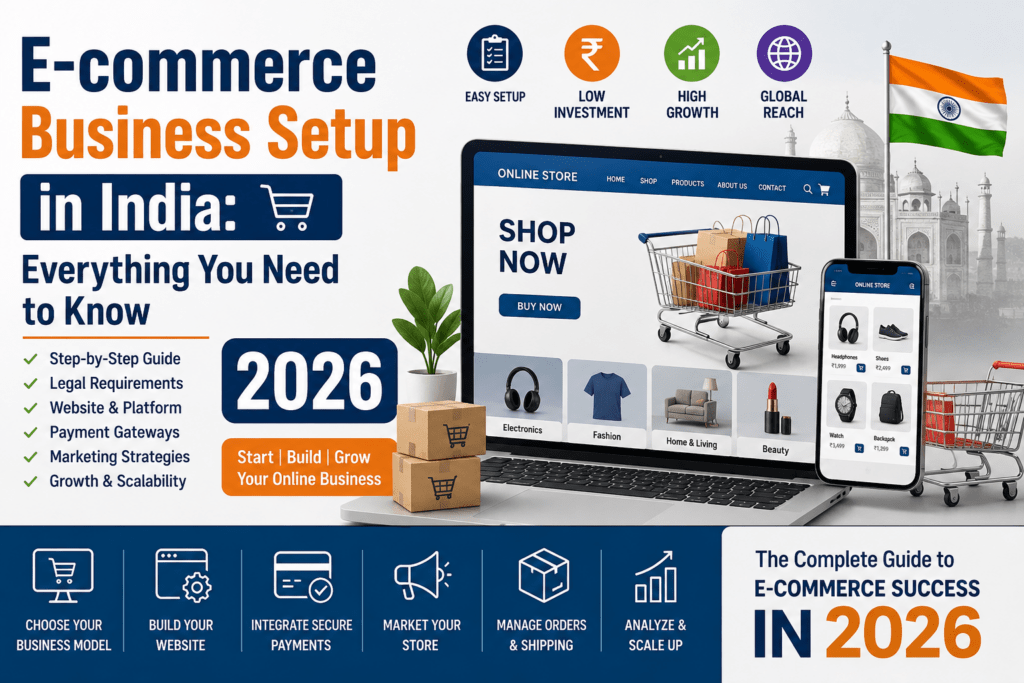
Starting an e-commerce business in India requires choosing a sales model (D2C, marketplace, or dropshipping), registering your business for GST, and choosing an operational platform. With the market projected to grow rapidly, success hinges on finding a highly focused product niche and executing a digital-first marketing strategy
- Marketplace Selling: Best for broad reach. You sell through established hubs like Amazon, Flipkart, or Meesho.
- Direct-to-Consumer (D2C): Best for building a brand. You build your own website using platforms like Shopify India or WooCommerce, which allows for direct customer data ownership.
- ONDC: An open-network initiative gaining massive traction in India. You can sell directly through networks like the ONDC Network without paying hefty marketplace commissions.
- Dropshipping: Minimal upfront investment where you hold no inventory, and products are shipped directly from the supplier to the customer.
- Business Structure: Choose a structure such as a Sole Proprietorship (easiest for beginners), One Person Company (OPC), or a Private Limited Company.
- GST Registration: Mandatory in India if your aggregate turnover exceeds ₹20 Lakhs (or ₹10 Lakhs in special category states). However, if you plan to sell on e-commerce marketplaces, GST is legally mandatory from day one.
- PAN & Bank Account: You must get a Permanent Account Number (PAN) in the name of your business to open a current business bank account.
- Import-Export Code (IEC): Necessary if you plan to source products internationally.
- Payment Gateways: You can integrate Indian gateways such as Razorpay or Cashfree into your D2C website to accept UPI, credit cards, and digital wallets.
- Logistics & Shipping: Partner with logistics aggregators like Shiprocket or Delhivery to automate shipping, manage Cash on Delivery (COD) services, and track orders across India.
- Meta Ads: Facebook and Instagram Ads for targeted consumer acquisition.
- Search & Shopping Ads: Google Ads to capture high-intent buyers.
- Influencer Marketing: Partnering with regional micro-influencers to build brand trust, especially crucial in tier 2 and tier 3 Indian cities.